Design Service
UX DESIGN
AGENCY
The gap between a product users tolerate and one they choose is almost always the UX layer. We design browser-based products: SaaS dashboards, internal tools, client portals and web configurators. The engagement covers user flows, wireframes, high-fidelity UI and a production-ready developer handoff. Design and build run in the same workflow, so what you approve in the prototype is what ships.
START A PROJECT →WHEN A WEB APP GETS
TREATED LIKE A WEBSITE
A marketing homepage gets visited once. A user spends thirty seconds deciding whether to continue and probably never comes back. Web applications work differently. The same user opens yours every day. They move through the same flows hundreds of times. Every extra click, every ambiguous label and every layout decision that seemed fine at first becomes friction they feel on every single session.
Most UX briefs miss this distinction. The agency brings website thinking: hero section, feature section, CTA. Those conventions do not translate to a dashboard, a configurator or a client portal. The information architecture, component hierarchy and interaction patterns are all different. Applying website design logic to a web application produces something that looks polished at handoff and frustrates users inside a month.
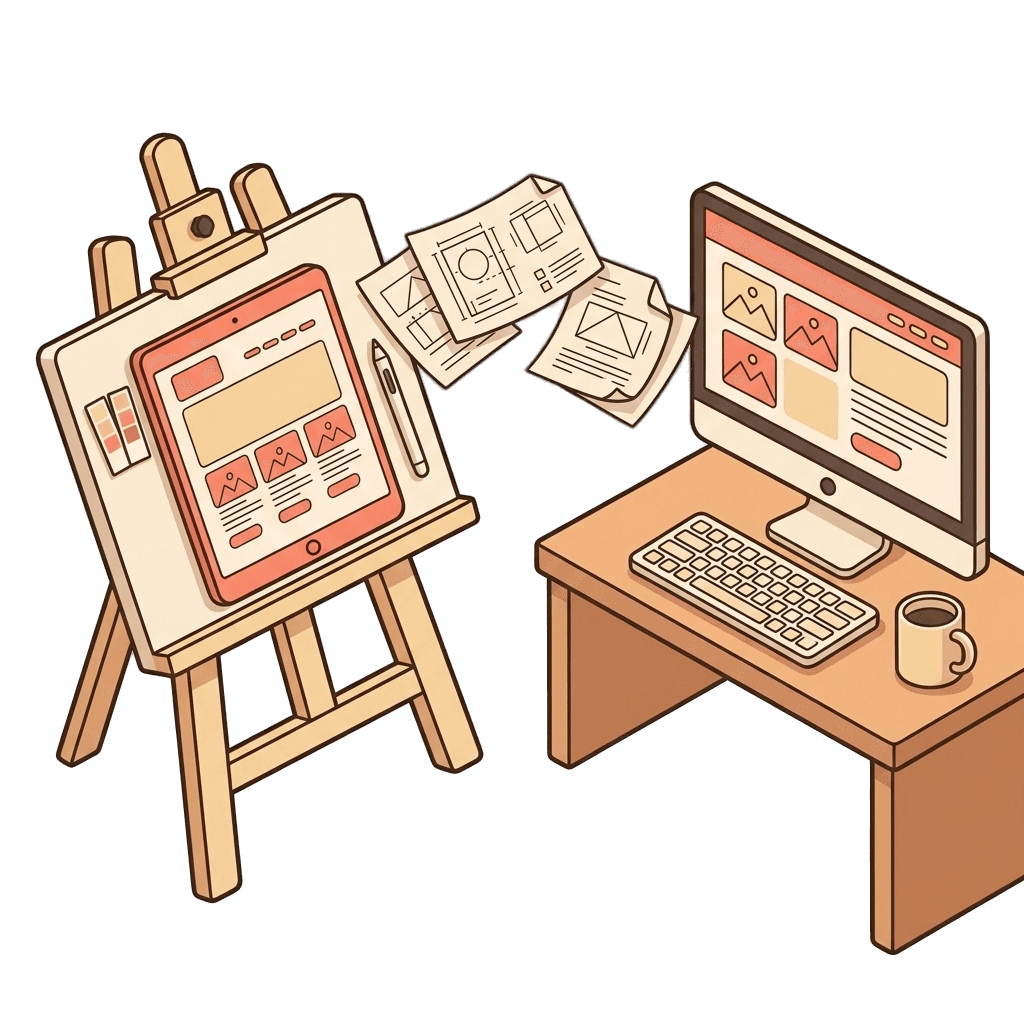
WHAT WE
DELIVER
USER FLOW MAPPING
Every engagement starts with the user flows: the logical sequence of steps a user takes to complete each core task. We map every path, identify where decisions happen and document the conditions that send users in different directions. This is the foundation that prevents scope creep, resolves disagreements about feature priority and gives the development team a functional spec before a single wireframe is drawn.
WIREFRAMES
Before colour and branding, the layout needs to work. We produce low-fidelity wireframes to establish the structural hierarchy of each screen, then mid-fidelity wireframes to resolve spacing, component placement and content density. By the time high-fidelity design starts, every layout decision has been reviewed and approved. Revisions at the wireframe stage cost a fraction of revisions at the UI stage.
HIGH-FIDELITY UI DESIGN
We produce the complete visual design in Figma: every screen, every interaction state (default, hover, focus, error, loading, empty) and every breakpoint. Typography, colour system and spacing are resolved and documented before development begins. What you see in the prototype is what the development team builds from.
DESIGN SYSTEM AND COMPONENT LIBRARY
A web application is not a collection of pages, it is a system of reusable components. We build a design system alongside the UI: every button variant, form element, data table, modal and notification documented with usage rules and spacing specifications. The development team builds components once and reuses them everywhere. Features built later from the same library stay visually consistent without a redesign.
DEVELOPER HANDOFF DOCUMENTATION
Figma files alone are not a brief. We produce handoff documentation covering component specs, interaction notes, responsive behaviour rules and edge case handling. A developer reading the handoff should be able to build every screen without guessing what was intended. This is the part of the process most agencies skip, and it is where most of the fidelity loss happens.
WEB APPS AS AN
SEO ASSET
Almost no UX agency talks about this, which is why it matters.
When a web application is built in Next.js, it has a crawlable URL structure, can carry canonical tags and schema markup, and is fully indexable by search engines. A marketing site and a browser-based web application can both rank in organic search. A native mobile app cannot: no crawlable structure, no URL architecture, no accumulated link equity.
A pricing calculator, a product configurator, a diagnostic tool or a data platform built as a Next.js web app can attract organic search traffic, earn inbound links from relevant publications and build domain authority over time. For companies building products with a public-facing layer, this means building an SEO asset at the same time as building the product.
The design brief should include SEO architecture from the start: URL structure, schema markup, Core Web Vitals targets and page-level indexing decisions. When those decisions are part of the spec, the development team implements them from day one. When they are retrofitted, they usually do not work as well. We build the SEO brief into the design spec.
HOW A PROJECT
RUNS
A typical engagement runs six to eight weeks from kick-off to developer-ready handoff. The industry average sits closer to ten months because most agencies manage design and development as separate phases with a handoff delay between them. We run both in the same workflow.
01
DISCOVERY AND USER FLOW REVIEW
Weeks 1-2
We map the core user journeys before any design work starts: who the product is for, what tasks they need to complete and what the decision points look like. This session resolves scope, surfaces assumptions and gives the rest of the engagement a shared foundation.
02
WIREFRAME SPRINT
Weeks 2-3
We produce low and mid-fidelity wireframes for every core screen. Layout decisions are made and approved before colour or branding enters the picture. Revisions at the wireframe stage cost significantly less than revisions at the UI stage.
03
UI DESIGN
Weeks 4-6
We produce the final UI in Figma: every screen, every state and every breakpoint. The design system and component library are built in parallel so the development team has reusable components ready from the start.
04
HANDOFF
Weeks 6-7
We document component specs, interaction notes and responsive behaviour in full. The development team builds from the handoff without guessing what was intended. Where development starts early, we stage delivery by section so design and build can run in parallel.
WHO THIS
IS FOR
We work with teams that have development capacity in place, either in-house or through a development agency, and need a design partner rather than a full-stack agency. The ideal client has a browser-based product and needs design expertise without hiring a full-time product designer or adding development to the scope.
- SaaS tools where users work inside the product daily
- Internal dashboards for operations, data or finance teams
- Client portals where end-users access reports or manage accounts
- Configurators that guide users through complex product or service selections
- Data visualisation platforms that present large datasets in a readable, actionable format
COMMON
QUESTIONS
- What is included in the design handoff?
- The handoff includes a complete Figma workspace with every screen, every state and every component documented. Alongside the design files, we provide written handoff documentation covering component specs, interaction behaviour, responsive layout rules and edge case handling. The development team should be able to build from the handoff without needing to request clarifications on design intent.
- Do you handle development as well as design?
- No. This engagement is design through handoff. We take the product from user flows and wireframes to a production-ready Figma workspace and developer documentation. The development team, whether in-house or an external agency, picks up from there. Keeping the scope clean means you get the full benefit of a specialist design team without paying for a development engagement you may not need.
- How long does a typical web app design project take?
- A standard engagement runs six to eight weeks from kick-off to handoff. That covers user flow mapping, wireframes (low and mid-fidelity), high-fidelity UI design across all screens and states, a component library and handoff documentation. Projects with a larger screen count or more complex interaction patterns run closer to ten to twelve weeks. We stage the work so development can begin on completed screens while later screens are still in progress.
- What does a client need to provide before the project starts?
- A product brief covering the core user tasks, any existing research or user feedback, and a description of who the product is for and what they need to accomplish. We run a discovery session in week one to fill gaps and validate our understanding of the user flows before any design work begins. Technical requirements, including API constraints, data structures and integration dependencies, should be flagged at the start so interaction design reflects what is actually buildable.
- Can the design system be reused for future features?
- That is the primary reason we build one. A design system built on documented components means every new feature starts from the same visual and functional foundation. New screens inherit the established patterns. New components follow the same specification format. The development team builds on familiar foundations rather than starting from scratch each time. For products that evolve over time, the design system is the asset that compounds.
DESIGN AND
THE BUILD
Design handoff is where most application projects lose their timeline. We avoid it by keeping Next.js development in the same team, so the components you sign off are the components that get built. Marketing pages run a different process again, covered under web design. Both sit inside the same set of services.
TELL US WHAT
YOU'RE BUILDING
Send us the product brief. We will tell you what the design scope covers, how long it takes and what it costs.
START A PROJECT →