Dental Industry
SEO FOR
DENTISTS
Dental practices live and die by their appointment books. Most of the ones stuck on paid ads got there because their website is slow, their Google profile is incomplete, and nobody built their pages to rank for the treatments patients are actually searching for. We fix all three.
GET A QUOTE →WHY MOST PRACTICES
STAY INVISIBLE
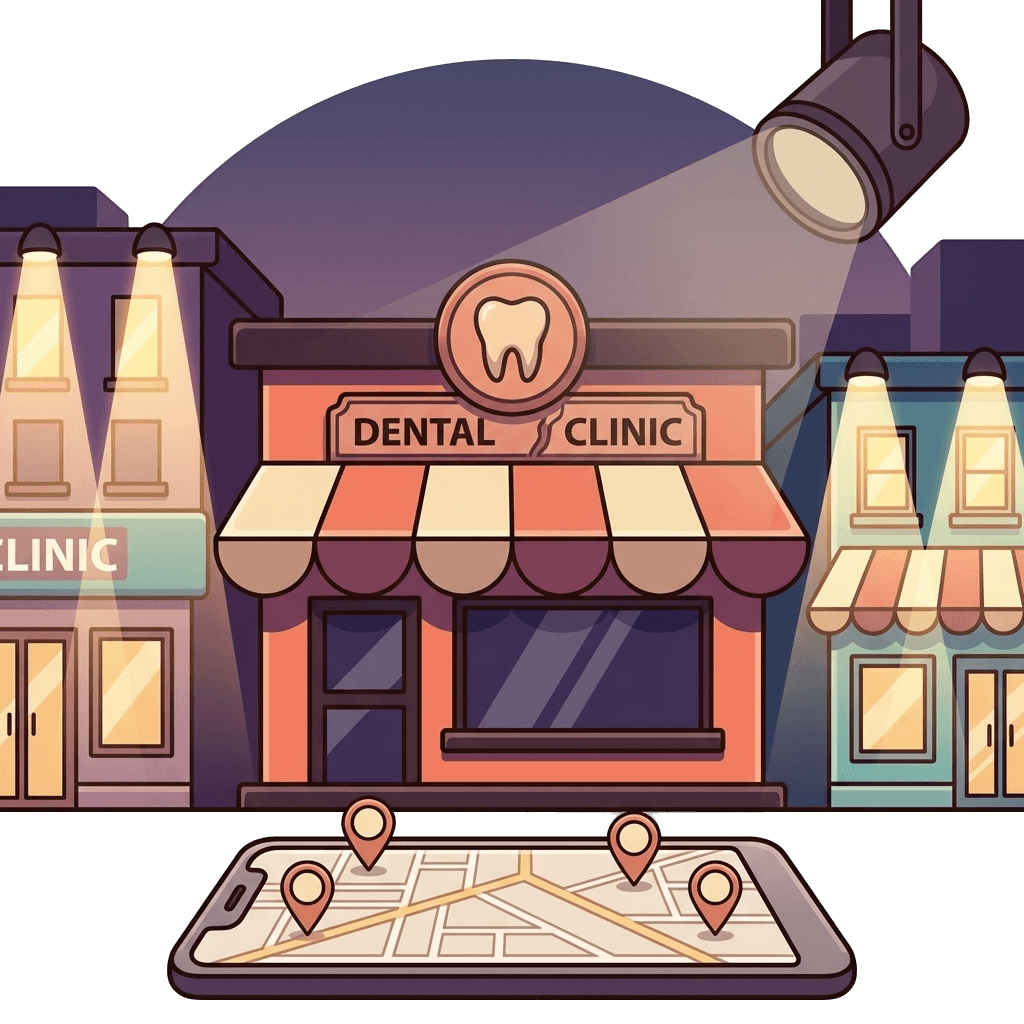
Most dental searches come with location intent already attached. A patient typing "Invisalign [suburb]" or "emergency dentist near me" has already decided they need care. They want to know who is closest and who shows up. Practices that capture that traffic have their technical foundations in order, an active Google Business Profile, and treatment pages written for what a patient actually types rather than how the practice describes itself internally.
Most dental practices have none of the three. The website is running on an outdated theme, the Google profile has not been touched since it was set up, and the service pages read like a brochure. The result is that ad spend goes up every year while organic traffic stays flat.
WHAT WE
DO

LOCAL SEO AND GOOGLE BUSINESS PROFILE
Dental searches skew heavily local. When someone types "dentist near me" or "teeth whitening [city]," Google shows three map results before any organic listing. We optimise your Google Business Profile and build the local signals that push your practice into that top three: consistent citations, review velocity, proximity data. Practices outside the local pack miss the patients who have already decided to book.
TREATMENT PAGE OPTIMISATION
The searches patients run for your treatments each have their own volume, competition level, and intent. "Dental implants" attracts someone who has done their research and is ready to spend. "Emergency dentist" is pure urgency with no patience for a second result. We build or optimise individual pages for each of your core treatments, targeting the specific query a patient types when they are ready to book rather than when they are still comparing options.
TECHNICAL SEO AND SITE SPEED
A slow website costs you patients before they read a single word. Google's Core Web Vitals measure load speed, layout stability and responsiveness. Sites that fail those benchmarks rank below the ones that pass. We audit and fix the technical layer, or build the site in Next.js from the start so Core Web Vitals pass from day one without a separate performance engagement down the line.
CONTENT THAT ANSWERS PATIENT QUESTIONS
Patients search more than treatment names. They search "how long does Invisalign take," "are dental implants painful," "what to expect after a root canal." Practices with content that answers those questions build trust before the first call and tend to show up in Google's featured snippets for pre-appointment searches. We identify what your patients are asking before they call and write the content that answers it.
BUILT FOR SEARCH
FROM THE BRIEF
Most dental SEO agencies start from wherever the website already is. Slow performance gets noted. A URL structure that makes no sense for search stays as is because restructuring it is not in scope. Schema gets added in month six, if it gets added. It costs more and takes longer because the whole engagement is remediation from the start.
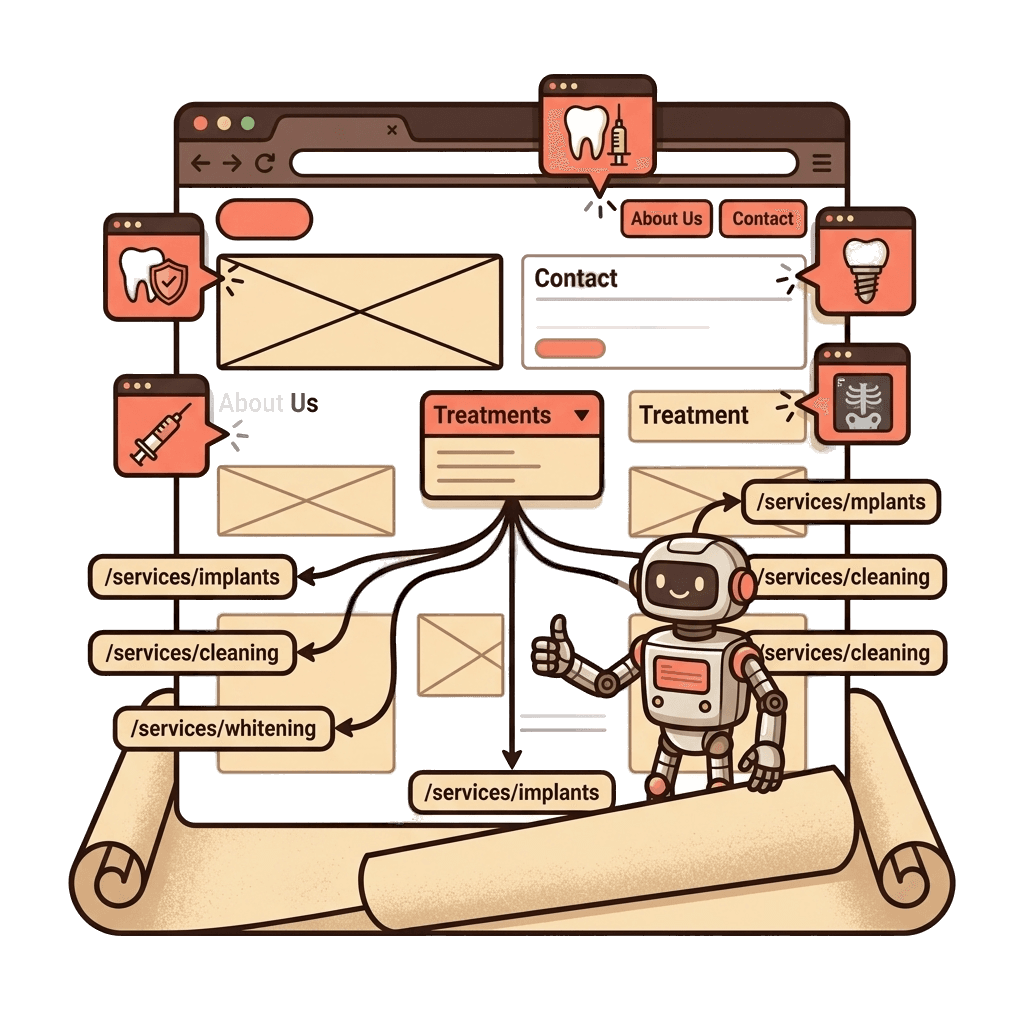
When we build a dental practice website, SEO is part of the brief before the first page is designed. The URL structure maps to the treatments patients search for. Each service page is written to a specific keyword target. Schema (LocalBusiness, MedicalBusiness, Service types, FAQPage) is in the build spec from day one, not discovered in an audit six months after launch. The result is a site that ranks from the start rather than one that needs fixing.
COMMON
QUESTIONS
- What is dental SEO?
- Dental SEO is the process of improving a dental practice's visibility in organic search results. It covers three areas: technical SEO (making sure your website is fast and crawlable), local SEO (optimising your Google Business Profile and building the signals that get your practice into the map pack for "dentist near me" searches), and on-page SEO (making sure each treatment page is structured and written to rank for the specific query patients use when they are ready to book).
- How long does dental SEO take to produce results?
- Local SEO and Google Business Profile improvements can produce movement within four to eight weeks. On-page optimisation for treatment pages typically shows results in six to twelve weeks, depending on how competitive your local market is. For new websites, allow three to six months before organic traffic becomes a reliable patient acquisition channel. Google needs time to crawl the site, assess its authority and test rankings. Practices that launch with a technically clean site and an active Google profile from day one tend to see results at the faster end of those ranges.
- How much does dental SEO cost?
- Dental SEO retainers typically run $1,000 to $3,500 per month depending on practice size, number of locations and how competitive the local market is. Single-location practices in smaller markets sit at the lower end. Multi-location practices or those in major cities need a broader scope to move the needle. We scope the work to what your market actually requires rather than putting you on a standardised package that may be too light or too heavy for where you compete.
- Is local SEO or organic SEO more important for a dental practice?
- Local SEO should come first for most practices. The map pack appears before organic results for almost every location-based dental search, and patients searching for a dentist are almost always within a specific radius and ready to book. Once your local presence is established, organic SEO compounds the advantage: it ranks treatment-specific pages for patients who are still comparing ("how much do dental implants cost," "best dentist for Invisalign"). Running both produces more patient acquisition volume than either does alone.
- What makes dental SEO different from generic SEO?
- The gap between a generic campaign and an effective one comes down to specifics. Dental searches are almost always local and high-intent, not broad research queries. Treatment keywords vary significantly by market: a national playbook applied to your city may target terms nobody nearby searches for. And the website's technical foundation matters more than most agencies will tell you. Practices on slow WordPress sites compete against practices on fast, well-structured ones, and content alone does not close that gap.
WHERE THE
WORK GOES
Most of a dental budget belongs in local SEO, because patients search with a suburb attached and pick from the Map Pack before they reach anyone's website. The site still has to hold them once they land, which is why we treat practice website design as part of the same job rather than a separate project. The other sectors we work in are approached the same way.
MORE PATIENTS
FROM SEARCH
Tell us your practice location, the treatments you want more bookings for, and where your website stands. We run a diagnostic across your local search presence, website performance and on-page structure, and come back with a clear picture of what it takes to rank in your market.
GET IN TOUCH →